President Cotton thanks the Class of 2013

Ponzi circa 1920

Ponzi circa 1920 (Photo credit: Wikipedia)

Class of 2013, Parents, Grandparents, Aunts, Uncles, Siblings, Cousins, Legal Guardians, and Parole Officers,

Welcome to the 2013 Commencement and Capital Campaign Kick-Off! While we celebrate the accomplishments of our graduating seniors we also look toward the future. What Willard College will look like when you return for your 20th Reunion is up to you, to the choices you make to invest forward to the next generations of Willard students.

Let me start by recognizing the great sacrifice that families have made to send their young people to Willard College. As they say, for nothing you get nothing. If you want quality, you must pay. Willard recognizes today that every time Mom and Dad reached for their wallet, they were wondering: Is this worth it? No one here in attendance can doubt your wisdom in choosing Willard.

Why? Because the Class of 2013 has been part of some of the most exciting changes since our transition from a psychiatric facility to a college. During your four years, our national accrediting body lifted sanctions on your School of Business, ended its groundless investigation of its dean, permitted the elimination of the Departments of Mathematics, German, and  Philosophy, and gave its approval to the integration of Politics, History, Economics, Sociology, English, and Anthropology into a single Institute of Human Studies. On the athletics side, we have reincorporated into the NCAA, having paid the penalties as stipulated in the 2010 agreement.

During your time at Willard, we have also raised the professional standards of our faculty through aggressive recruitment of teachers willing to work in our more flexible credit and schedule rubric. We now have a healthy flow of faculty, and have reduced much of the stagnation that is killing higher education. Not unlike leading Fortune 500 corporations, Willard needs an adaptable and user friendly workforce.

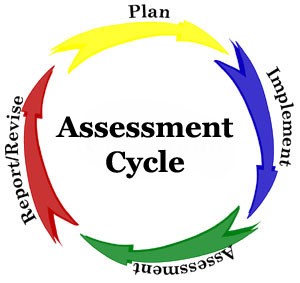
We have also enriched dialogue between administration and faculty through a thorough and often intense assessment and assessment of assessment regimen. Everyone on campus whose job it is to educate or supervise education is on the same page. And I mean that literally. Every faculty member’s day ends with an hour meeting with the appropriate dean to assess the day’s achievements and to identify areas in need of improvement. The quality control at Willard College is the new industry standard, and it is one that matches our corporate models.

But for Willard to move forward to greater heights, we need the support of its alumnus. Can you return a measure of what Willard gave to you? Can you do as the great philosopher Charles Ponzi suggested, and pay it forward? Can you invest today to pay for those who have already invested?

In the end, it is up to each one of you. Do you believe in the Willard experience? When some day, ten years from now, the guy next to you on the train asks “Where is Willard?” will you be able to answer: “Willard is tomorrow, but it has not forgotten yesterday.”

With a warm embrace,

President Dr. Henry Cotton

Where is Willard College?

catalan


The parent of a prospective student recently asked me this question. Where is Willard College? While it is easy to find Willard College on a map, I suspect that the parent’s question was deeper than mere geography. Let me try to answer.

Willard College is on the edge. Willard College is exactly where it needs to be. Willard College is tomorrow today. Willard College is yesterday’s next week. Willard College is a dream, a hope, and a wish. Willard College is whatever you want to make Willard College be. Willard College is hard work, devotion, and sacrifice.

In the next few days, I will be laying out what our Dean of Marketing has titled “The Willard Promise.” I hope you will stay tuned for this exciting announcement.

Sincerely, President Henry Cotton

Willard College Lowers Tuition

Century-Prison-1191

Dear Willard College Faculty and Staff,

I am thrilled to announce that Willard College will be the first college in the United States in the past 15 years to LOWER its tuition. Effective AY 2013-14, tuitions will be cut across the board by 20%. Needless to say, the announcement was met with applause from all quarters. The national media have been contacted, so please expect calls from reporters in the next week. While this is not Princeton offering free tuition, we feel that the move places Willard College in an extremely advantageous position in relationship to both comparable institution, but also will allow us to compete for tuition flows that are normally directed to more competitive and prestigious institutions.

We came to the decision  following a two year cost-benefit analysis by the highly regarded Heritage Foundation. Instrumental in selecting the Heritage Foundation was their recent research on the cost/benefits of prison privatization. This exciting growth sector offers an important model for Willard College given their track record of reducing costs and growing revenue.

So how do we recoup the revenue loss from offering a 20% tuition reduction?

In part, the plan for Willard College is premised on decades of research on consumer behavior. We now know  that the same consumer who hesitates to spend a large sum of money in a single purchase, will often, if conditions are correct, spend the same amount of money in purchases spread out over a long period of time. Moreover, surveys suggest that these sorts of consumers will spend without worry or care.

With a nod to a number of highly successful retail industries, as well as countries attempting to get out of the red, Willard will impose a regimen of hidden  fees, fines, and add-ons. Amenities currently provided free of charge, will now come at a cost. These include senior week activities (with an additional fee for the end of year tradition of jumping in the Charcot Fountain), towels at the Athletics Center and Aquatics Stadium, cable, wifi, pillows, blankets, etc. Over the summer facilities staff will remove all water fountains and replace them with Dasani bottled water vending machines. In the dining halls, deserts will not be included in the meal plan, but can be purchased at industry-standard prices. Parking rates, which have in the past excited student complaints, will be raised nominally, but we will add charges each time a student wishes to take their vehicle off campus. These are just a few of the examples of changes to campus that will welcome students in the fall.

We are also following the Heritage Foundation’s recommendations for continuing to cut our costs. To that end, all functions outside of academics and athletics will be managed by one of the leading prison management companies, CCA. This leader in the industry will manage and maintain dormitories, dining halls, the student clinic, our on-campus rehab and counseling center, laundry, and recreational activities. CCA will also operate the Willard College Office of Public Safety. By outsourcing, we anticipate savings that will more than off-set our tuition reduction.

With the present financial plan of action, which complements our work to realign departmental mission statements, we are confident that by next year’s commencement, Willard College will be standing tall among its peer institutions.

Sincerely,

President Henry Cotton

P.S. Willard College is pleased to announce a new learning partnership with Florida Atlantic University. I have worked closely with President Mary Jane Saunders whose work selling the naming rights of the FAU football stadium to GEO, Inc. has won her accolades for visionary leadership.

Commencement 2013: From Failure to Fiasco

abercrombie-and-fitch-ad

Dear Willard College Faculty and Administrators,

Over the past month, I’ve been deluged with letters about next week’s commencement speaker. Who is it? “It” is complicated.

Through the Office of Media Processing, we surveyed campus groups to get a sense of what sorts of speakers might be of interest. The top categories for speaker included “someone who has worked to improve the lives of people in Africa or Latin America” (Archbishop Desmond Tutu was mentioned several times), “someone engaged in social entrepreneurship,” “an actor/actress who has made important contributions to the arts” (Sean Penn and John Stewart were top choices), and “someone in the U.S. who has fought for social justice.”

I then appointed a task force of my top administrators, including Dr. Horatio Eichmann, to develop a working list. We thought the list balanced student interest with cost, and each of the invited speakers would have brought significant press to the college.

Top of the list was President Robert Mugabe of Zimbabwe. Unfortunately, international legal complexities rendered a visit to the United States quite difficult. We also came to understand that despite his early success as an anti-colonial revolutionary, his reputation of late is problematic.

Our second choice was Efraín Rios Montt, former president of Guatemala. It seemed to us that Willard College should tap into the whole “Latino thing,” and his presence on campus promised to bolster our somewhat anemic enrollment by students of color. The same day that the invitation was issued, news reports emerged that he was about to be convicted of genocide. We crossed him off the list, and I asked Eichmann to dig deeply into the collective wisdom of the assembled and to please go light.

Kim Kardashian, whose youngest half-sister applied to Willard, was accepted, but declined to enroll, initially expressed interest. When we learned of the actress’ speaker fee, we had to back out. We faced similar problems with former House Speaker Newt Gingrich, former Senator John Edwards, and former congressman Anthony Weiner.

The next morning, he came back with Gerald P. Boyle, an attorney known for his defense work in difficult cases. Everyone loves the dedicated and courageous attorney fighting to exonerate the innocent. One of those clients was Jeffrey Dahmer.

At this point, we were running out of options when the Dean of Business, Larry Madoff, suggested Mike Jeffries, CEO of Abercrombie and Fitch. Jeffries’ work with A&F has been an inspiration not only to many of our students, but has of late inspired Willard’s Office of Marketing, Sales, and Promotion. The last three years of capital campaign and student recruitment were modeled on A&F. Jeffries’ 2006 interview where he laid out A&F’s philosophy was instrumental in some major changes at Willard.

“[Sex is] almost everything. That’s why we hire good-looking people in our stores. Because good-looking people attract other good-looking people, and we want to market to cool, good-looking people. We don’t market to anyone other than that. In every school there are the cool and popular kids, and then there are the not-so-cool kids,” he told the site. “Candidly, we go after the cool kids. We go after the attractive all-American kid with a great attitude and a lot of friends. A lot of people don’t belong [in our clothes], and they can’t belong. Are we exclusionary? Absolutely.”

Discussions ensued, and Mr. Jeffries expressed interest in reaching out to young people who wanted to hear the A&F message. He even agreed to waive his speaker’s fee. And then last week, a small problem developed. Apparently, A&F’s marketing has upset some communities. Especially problematic was the Day after Mother’s Day protest in Chicago.

At this point, Commencement is in two weeks, and we have no one. I’ve directed my office, therefore, to work through Speakers, Inc. One of their speakers, Matt Foley, comes highly recommended and we hope to have a signed contract by the end of the day.

Sincerely,

President Henry Cotton

P.S. The good news is that we did not invite AIG’s CEO, Robert Benmosche. No one needs that sort of speech.

Faculty must attend all meetings

office bunker

Dear Faculty and Administration,

Over the past several years, Willard College has been engaged in a re-visioning of our campus, its mission, and its future. As we take on some of the exciting challenges of 21st century higher education, as outlined in previous notes (see micro-credits, televised classrooms, etc.), the campus community has been asked to come to together to “put the pieces together,” “stretch out and then close the loop,” and to “build a cyber-campus,” that goes beyond the traditional “brick and mortar” learning space.

Of late, however, the president’s office has been receiving troubling reports concerning a precipitous drop in faculty participation in the face-time meetings. Excessive absenteeism led me to take the extreme measure of sending my nine assistant and associate provosts out to find the 20 missing faculty. While five of the faculty were in their offices, the other fifteen could not initially. We knew they were on campus because Parking Services had determined that their vehicles had entered the faculty parking lot. (Our recent improvement in the gating of that facility has allowed us to better monitor who is on campus).

The members of the Provost’s office then called in officers from Public Safety to determine the whereabouts of these faculty members. Within 24 hours, Public Safety had investigated the matter and gave my office a thorough report. What follows are the main highlights of the Public Safety assessment.

“Twenty officers were assigned to the case. Working in teams of two, with sound and heat detection systems, we worked our way through the office buildings where the missing faculty work. Our devices picked up signals from previously searched, and apparently empty, offices. Officers entered the offices of faculty, with permission of department chairs. Our detection equipment continued to register sounds and evidence of live bodies. A summary inspection revealed that said faculty had built a variety of hiding spaces. Several professors in English had rigged hammock like structures under their desks. Six members of Biology and Chemistry had removed ceiling tiles and constructed a network of inter-locking safe-rooms in the crawl-space  between the sub-ceiling and the structural ceiling. Finally, two members of Computer Science had built “Committee Shelters” in hollowed out spaces behind book shelves. All of these shelters were provisioned so that the subjects could remain in hiding for long periods of time. In addition to food and water, the ceiling and wall shelters had portable toilet devices, wifi, etc. We also located a faculty blog called committeshelter.com where faculty shared advice on design and construction of the shelters. The blog also contained a clearing center where faculty could provide plausible excuses. This appears to be modeled on websites devoted to helping cheating spouses with alibis and excuses.”

The report runs to 10 pages. A culture of pervasive lawlessness has come to dominate our faculty. The behavior outlined above suggests that faculty may be engaged in other actions that are destructive to the physical plant of the college, to the morale of our employees, and to the ability to focus on the work of the college. My administration pledges to continue to investigate the so-called “committee shelter” practice. We will continue to search, locate, and destroy these shelters and also review committee assignment practices to determine the best mode of controlling attendance and reducing absenteeism.

Sincerely,

President Henry Cotton

P.S In the course of the investigation described above, Public Safety determined that the student organization “Willard College Community Support Agriculture Club,” in addition to providing shares of fruits and vegetable , has also been selling “Malverde shares.” We had assumed that ‘malverde’ was in the tomatillo family, but have recently determined that this is in fact cannabis. Several club members are on suspension pending investigation. As of yet, no faculty or staff appear to have been involved.

Assessing Assessment

Dear Faculty,

As I mentioned at our last all-College retreat, my administration is contemplating ways to render more efficient and meaningful student evaluations. There are many ways to measure faculty effectiveness; enrollments and their correlation to the cost of the course to the college, student statements about specific faculty, law suits by disgruntled parents, and even police reports in the local paper concerning recent events covered at an executive session with the provost last month.

What is clear is that the traditional end of semester paper evaluation is from an era long gone. The forms are problematic on several levels. First, the college is moving away from paper for reasons of sustainability and efficiency. Second, we are asking the students to synthesize and analyze 16 weeks of class into a single statement. All of the data shows that the average 18 year old is neither interested nor equipped to do this sort of long-term reflection. We also believe that our students have the right to have their voices heard with greater immediacy and frequency. The Facebook-generation does not wait 16 weeks to make their voices heard.

Therefore, Willard College will soon be transitioning to a system that is up-to-date, timely, efficient, and will give us a more holistic picture of faculty performance. Our newly appointed Vice President for Faculty Development and Evaluation, Dr. Horacio Eichmann, will overhaul the old evaluation system and revolutionize our credit delivery system. I have authorized Dr. Eichmann to take whatever steps necessary quickly execute these changes throughout campus.

Ratemyprofessor.com is a website where college students post anonymous assessments of their professors using four categories: Overall Quality, Helpfulness, Clarity, and Easiness. Beyond the quantitative rubric, students are invited to post qualitative statements. This technology is open sourced and there is no cost to Willard College.

The use of ratemyprofessor.com has the benefit of immediacy. A student can leave class and immediately post a review to the website. Ideally, students would post ratings from their laptop during class. Unfortunately, many Willard faculty continue to forbid lap tops or other electronic devices in the classroom. Dr. Eichmann will be addressing this bottleneck in the coming weeks.

At present, we are uncertain how to assess ratemyprofessors’ fifth category of “Hotness.” The existence of this category, however, suggests that the old model of the frumpy, fatigued, and poorly dressed faculty simply does not reflect the Willard brand. Moreover, it runs counter to the media-rich environment that young people experience on an hourly basis throughout their lives. As education moves closer into alignment with mass media, entertainment, and digitalia, we must be sensitive to the appearance of our content providers.

The second technological adaptation is clickers. Across the United States, professors have begun to employ clickers as way to quiz large classes during the instruction time. The answers are instantly tabulated and feed directly into the instructor’s grade-book. The Office for Assessment of Assessment Measures, which as you will recall was created three months prior to the Office of the Vice President for Faculty Development and Evaluation, is assessing if clickers can be used to also provide minute by minute evaluation of instruction. Clicker feedback could be graphed out to show how content providers are performing, not during the course of a semester, but over the course of fifty minutes. Faculty would receive at the end of each instruction day, a print out of each student’s assessment, and the average and mean assessments of the entire class. They would also receive a six page analysis of how their performance compares with all of the previous days’ assessments, and also compared with all faculty on campus, as well as faculty at other participating institutions.

Shortening the time between content-delivery and student assessment can only be implemented by flexibilizing credit hour allocation. Starting this fall, Willard College will be the first college to introduce the .25 credit course. Where the typical college student takes 120 credits, or 40 or so courses, Willard students will take between 80-160 courses. Most classes will only last two weeks. Students can construct a curriculum, and even self-designed majors, from more flexible instructional blocks.

The changes outlined above will to insure that my administration has a thick and rich flow of faculty assessment data which we can apply to the ongoing departmental assessment process. And rest assured, as the college continues to restructure, we will be mindful to continue to build the administrative apparatus necessary to analyze and apply this data.

Sincerely,

Henry Cotton

assessment-cycle